Sterling silver jewelry is a standout choice amongst most jewelry. It’s a beautiful option to add to your jewelry collection or give as a gift. But one thing that worries many people is how long the jewelry retains its shine. Does 925 sterling silver tarnish?
In this guide, we will provide answers to pressing questions about sterling silver—if it tarnishes, what causes the tarnishing, how fast does it tarnish, and so on.
Does 925 Sterling Silver Jewelry Tarnish?
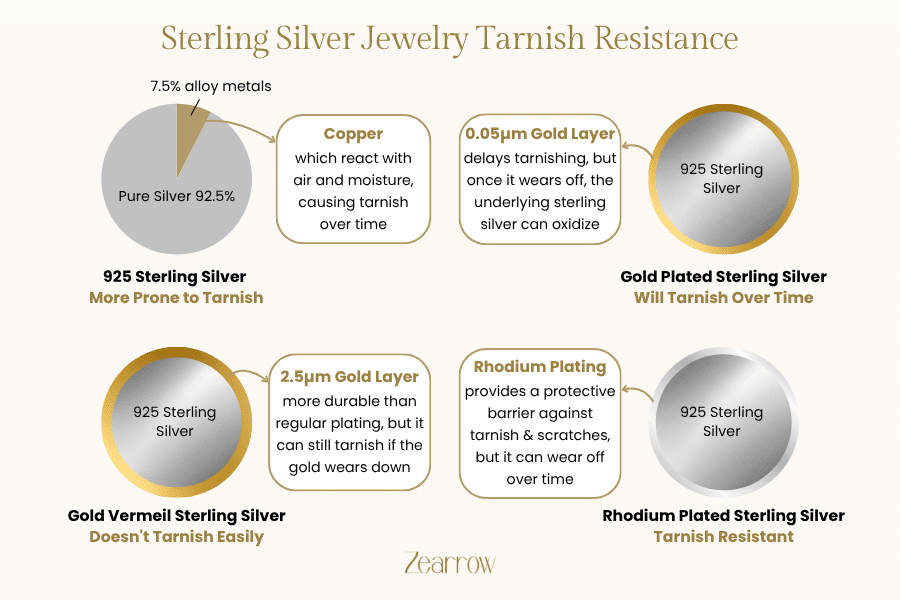
Yes, 925 sterling silver jewelry tarnishes over time due to its composition. Sterling silver jewelry is made of 92.5% pure silver and 7.5% alloy metals (most commonly copper). While pure silver is naturally resistant to corrosion and oxidation, copper reacts with oxygen, moisture, and sulfur compounds in the air. The reaction forms a darkened layer on the jewelry surface known as tarnish. This process is unavoidable, but it is possible to slow down the effect with proper cleaning & maintenance.
Does Gold Plated Sterling Silver Tarnish?
Gold-plated sterling silver is resistant to tarnishing at first but the gold layer is usually thin and wears off easily. As it wears off, the sterling silver base becomes exposed to corrosion.
Basically, the longevity of a gold-plated sterling silver depends on how thick the plating is and how well it is maintained.
Does Gold Vermeil Sterling Silver Tarnish?
You might be wondering, does gold vermeil tarnish—especially since gold-plated pieces don’t retain their shine for long. Well, gold vermeil jewelry has a thicker gold layer (at least 2.5 microns), which makes it able to resist tarnishing better.
But while this added thickness provides more protection, it is not permanent. Continuous exposure to moisture, sweat, perfumes, and friction will gradually wear down the gold layer. Once it becomes thin, the underlying sterling silver begins to tarnish.
Does Rhodium Plated Sterling Silver Tarnish?
NO. Rhodium-plated sterling silver does not tarnish easily.
Another question you may want to ask is: is rhodium-plated sterling silver good? YES. The sterling silver base is typically plated with rhodium (a tough, white compound) that’s highly resistant to corrosion and oxidation. This plating gives the jewelry a bright, mirror-like finish—which does not just add beauty to the sterling silver but protects it from damage. In fact, you can count on it if you need reliable waterproof silver jewelry.
However, just like other plating, rhodium plating is not permanent and will wear off over time. So, it’s advisable that you re-plate the jewelry when the rhodium layer begins to wear off.
Does 999 Silver Tarnish?
999 silver (also known as fine silver) tarnishes much slower than sterling silver due to its high purity level of 99.9% silver. Since it contains little to no copper or other reactive metals, it is less prone to react with oxygen, moisture, and sulfur compounds in the air.
However, it is not completely immune. In environments with high humidity, pollution, or sulfur exposure, even fine silver can develop a slight tarnish.
What Causes Silver to Tarnish?
Silver tarnish occurs when the metal reacts with substances that contain sulfur, resulting in a compound known as silver sulfide on the jewelry surface. These sulfur compounds are present in air pollution, sweat, cosmetics, and perfumes.
Factors like humidity, heat, and poor storage conditions can accelerate this reaction. Also, frequent contact with skin oils and chemicals can speed up the process. Over time, this buildup becomes visible as discolorations—commonly recognized as tarnish.
How Fast Does Silver Tarnish?
The speed at which silver tarnishes depends heavily on environmental and personal factors. In humid or polluted environments, or even when frequently exposed to sweat, chemicals or water, your jewelry can begin to tarnish within a few days.
In contrast, jewelry stored in a dry, cool, and airtight environment may take several months before showing noticeable tarnish signs.
Individual skin chemistry also plays a role. Some people have oily skins that naturally accelerate the oxidation process.
What Color Does Silver Tarnish?
Silver tarnish develops gradually and changes color over time depending on the level of oxidation and environmental exposure. It often starts from light yellow or dark gray film that may go unnoticed. Then, as the reaction continues, the discoloration deepens into darker shades of brown and eventually black.
Does Sterling Silver Tarnish Green?
Sterling silver itself doesn’t turn green, but the copper content in the alloy can react with moisture, sweat, or skincare products on the skin. This eventually leaves a greenish residue on the skin. It is harmless but can be irritating to most people.
Is Tarnished Silver Worth Less?
No, because tarnishing only affects the surface of the metal. The jewelry does not lose its intrinsic value; the silver content remains the same regardless of discoloration.
This is not to take away the fact that heavily-tarnished jewelries are less appealing, and can impact their resale or perceived value. But once cleaned or polished, the jewelries regain their original appearance.
How Long Does 925 Sterling Silver Last?
925 sterling silver can last for decades or even a lifetime when properly maintained. It’s very durable and can be worn everyday but it still requires optimal care to prevent excessive tarnish.
How to Remove Tarnish from Silver Jewelry?
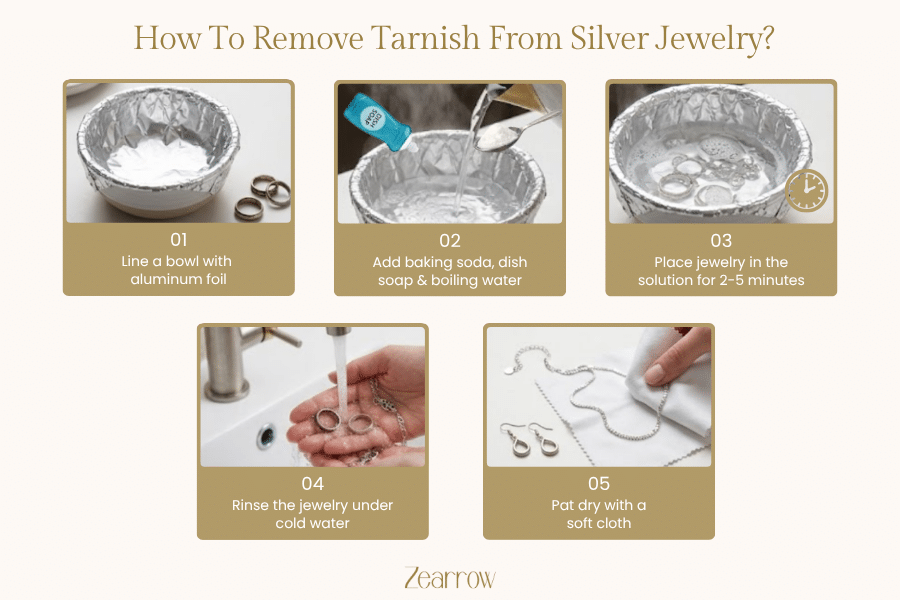
- Line a bowl with aluminum foil: Prepare a clean bowl and line it completely with aluminum foil. The shiny side should be outwards, so the tarnish-removal reaction works efficiently.
- Add baking soda, dish soap, and boiling water: Combine baking soda with a few drops of mild dish soap, then pour boiling water into the bowl to activate the solution.
- Place jewelry in the solution for 2-5 minutes: Carefully place the silver jewelry into the solution, ensuring it touches the foil, and allow it to sit for 2-5 minutes.
- Rinse the jewelry under cold water: Take the jewelry out and rinse thoroughly under cold running water to remove any leftover solution.
- Pat dry with a soft cloth: Use a soft, clean cloth to gently pat the jewelry dry, ensuring all moisture is removed to restore shine and slow future tarnishing.
Conclusion
So, does 925 sterling silver tarnish? Yes, it can tarnish over time. But it’s a natural, manageable process that doesn’t take away from its value or durability. With proper care, it can maintain its shine and luster for years.If you want better resistance and longer-lasting beauty, rhodium-plated sterling silver is a smarter choice. For premium quality and reliable craftsmanship, working with a professional custom jewelry manufacturer ensures you get pieces designed to last.