The widespread popularity of brass jewelry didn’t just start now. It’s been since the olden days when they were won by royalties and the rich as a symbol of wealth. Nowadays, it’s become a vintage metal that captures everyone’s attention. But just like other jewelry materials, consumers often have questions about wearing it daily—especially those with sensitive skin.
In this article, we will answer the common question, is brass jewelry hypoallergenic and also share other important information you need to know.
What is Brass Jewelry Made Of?
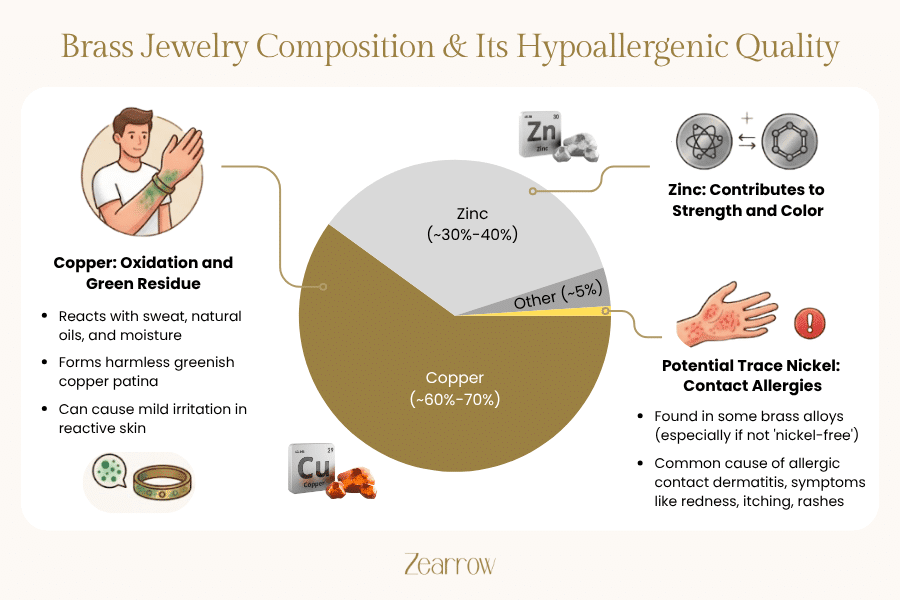
Brass jewelry is primarily made from a combination of copper and zinc. The exact ratio varies depending on the manufacturer, your desired finish, color, and durability. But oftentimes, copper has a larger percentage (55-95% by weight) and zinc (5-45%).
In some cases, the brass jewelry may contain alloy metals of trace elements of nickel, tin, or lead to improve the jewelry’s strength.
Is Brass Jewelry Hypoallergenic?
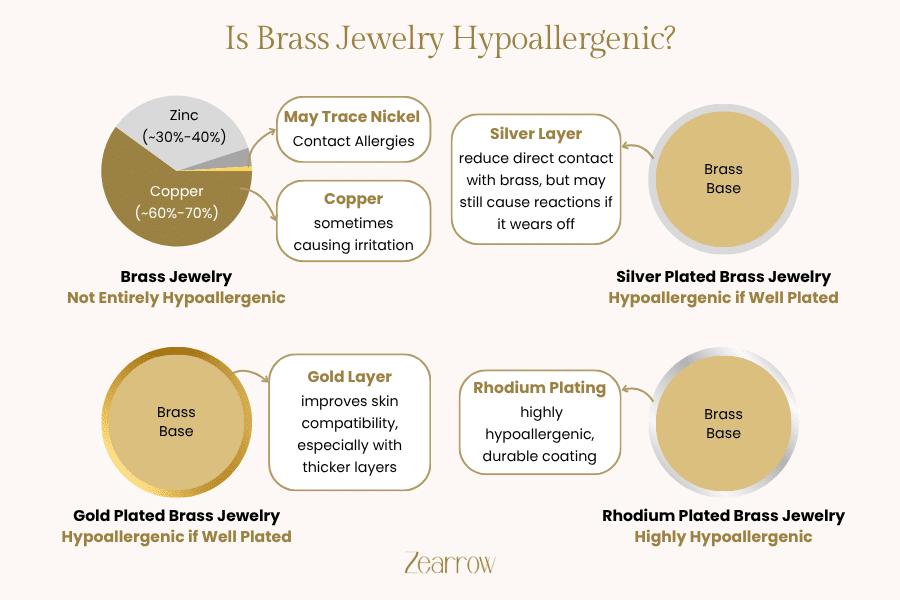
So, is brass hypoallergenic? It depends on the composition. If it’s composed with just copper and zinc, it is hypoallergenic. But when it contains trace amounts of allergy triggering metals like nickel or lead, it is not hypoallergenic.
However, if the brass jewelry is well-plated, you can rest assured that it won’t cause any allergic reaction. But when the plating starts to fade off, there are high chances of experiencing skin irritation.
Why Brass Jewelry Can Cause Skin Reactions
- The Role of Copper in Skin Sensitivity: When copper is exposed to moisture, sweat, natural body oils, or chemicals, it oxidizes and triggers irritation or leaves green tints on the skin. This reaction is naturally harmless, but prolonged exposure can cause discomfort for people with reactive skin.
- Presence of Nickel in Some Brass Alloys: Certain alloys may contain trace amounts of nickel to improve the jewelry’s hardness and durability. Meanwhile, nickel is one of the most common metal allergens and can cause itching, redness, swelling, or rashes. Thus, it’s essential that you know what is nickel-free jewelry and verify the composition of your brass jewelry.
Is Plated Brass Jewelry Hypoallergenic?
Plated brass jewelry is generally more hypoallergenic than un-plated brass pieces. Although the level of safety depends on the plating material and thickness.
Is Silver Plated Brass Jewelry Hypoallergenic?
Wondering, is silver plated brass hypoallergenic? Silver plating is hypoallergenic, as it creates a protective layer between the brass core and the skin. The thicker the silver plating, the better the hypoallergenic feature. But when the plating wears off, skin irritation is imminent, especially if the jewelry contains a large percentage of copper or trace amounts of nickel.
Is Gold Plated Brass Jewelry Hypoallergenic?
Wondering, is gold plated brass hypoallergenic? Gold plated brass jewelry is generally skin-friendly because the applied gold layer provides a protective barrier over the brass surface. The thicker the gold layer, the better the hypoallergenic feature. But once the plating fades and the brass jewelry comes in direct contact with the skin, there will be reactions.
Is Rhodium Plated Brass Jewelry Hypoallergenic?
Rhodium is a highly hypoallergenic, durable coating metal. When it’s plated on brass jewelry, it becomes safe for sensitive skin. It creates a strong barrier that prevents direct exposure to the brass underneath. However, the thicker the rhodium plating, the better the hypoallergenic feature. Unless re-plated immediately, the jewelry can cause skin reactions when the plating wears off.
Are Brass Earrings Hypoallergenic?
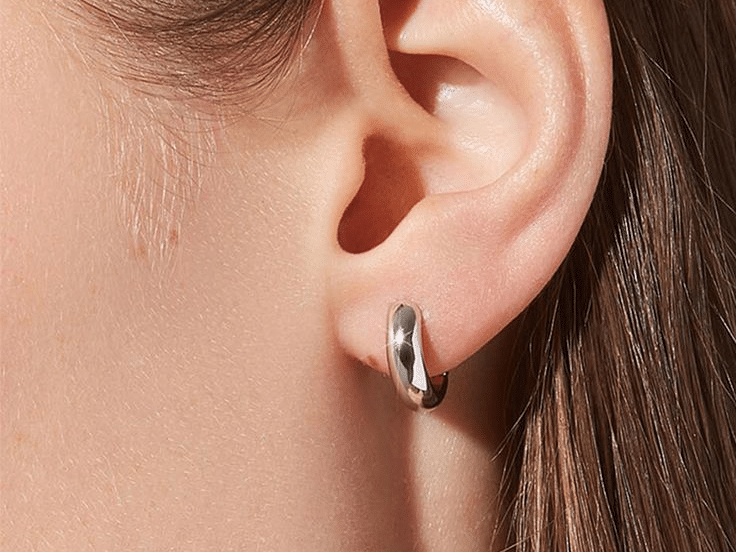
Is brass good for sensitive ears? NO, because pierced ears are very sensitive to allergens. They can react to even the smallest trace of allergic metals. Direct exposure to copper or nickel may cause itching, redness, or discomfort. Thus, it’s advisable to choose a hypoallergenic earrings type that is safe to wear for piercings and long periods.
Does Brass Turn Skin Green?
YES, brass jewelry turns skin green because of the copper content in it. When copper oxidizes, it causes green discoloration that transfers onto the skin. This green tint is harmless, but it can be frustrating and irritating. Protective plating and proper care can help reduce the discoloration.
Does Brass Have Nickel in It? Is Brass Jewelry Safe?
Pure brass is mainly composed of copper and zinc. But other brass alloys that are used in making jewelry contain nickel, primarily for more durability. Brass jewelry is safe but only the ones that are nickel-free. Individuals with metal allergies or highly reactive skin should always verify the jewelry material composition before making buying.
Is Brass Good for Jewelry?
Yes, brass is one of the best materials for making jewelry, particularly because of its low price, longevity, and gold-like appearance. Also, it’s easy to shape into different styles and suitable for intricate vintage-inspired designs.
But on a personal level, is brass jewelry good? The answer to this depends on the wearer’s skin sensitivity, environment, and maintenance habits. If the wearer has a highly sensitive skin, doesn’t care for the jewelry, and is often exposed to moisture, sweat, or chemicals, brass jewelry is not good. But if otherwise is the case, brass jewelry is an excellent option.
Best Alternatives to Brass for Sensitive Skin
It’s important that you know which metals are hypoallergenic and can be used in place of brass to make jewelry. Here are some hypoallergenic jewelry material options, as well as coated and brass jewelry solutions for sensitive skin:
Hypoallergenic Jewelry Material Options
- Titanium: is one of the most hypoallergenic metals available today. It is lightweight, highly corrosion-resistant, nickel-free, and extremely suitable for individuals with sensitive skin or metal allergies.
- Surgical Stainless Steel: offers excellent durability and strong resistance to tarnish & corrosion. High-grade surgical stainless steel is commonly used in piercings and other body jewelry.
- Gold: especially higher karats like 18K, 22K, and 24K, are generally more skin-friendly because of their lower concentration of reactive alloy metals. Lower karats may contain nickel or copper.
- Sterling Silver: is composed of 92.5% pure silver and 7.5% alloy metals (usually copper). High-quality sterling silver is relatively safe, though some individuals may still react to the copper content.
- Rhodium: is an extremely hypoallergenic precious metal commonly used as a protective jewelry coating. It’s bright reflective finish, corrosion resistance, and skin compatibility make it a preferred option for sensitive skin.
Coated and Plated Brass Jewelry Solutions
- Silver Plated on Brass: Silver plating creates a protective outer layer that improves the appearance and skin friendliness of brass jewelry. Thicker silver plating usually provides better durability and reduces direct contact with the brass underneath.
- Gold Plated on Brass: Gold plating enhances brass jewelry with a luxurious gold-like appearance, while helping reduce oxidation and skin irritation. Higher-quality gold plating with more thickness offers better longevity and wear resistance.
- Rhodium Plated on Brass: Rhodium plating provides one of the most effective barriers against tarnish, oxidation, and skin irritation. It creates a bright reflective finish and significantly increases the hypoallergenic performance of brass jewelry.
Conclusion
To wrap things up, is brass jewelry hypoallergenic? It depends on the composition. If it’s just copper and zinc, it is hypoallergenic. But if it contains nickel, lead, and other allergy triggers, it is not.
Whether you’re a customer or you own a brand, the ultimate advice is that you only buy brass jewelry from a reputable custom jewelry manufacturer who uses hypoallergenic materials, reliable plating quality, and prioritizes safety of individuals with sensitive skin.