When selecting jewelry, one of the key things to consider is how well they can stand the test of time without losing their shine. The same applies to gold plated jewelry — a popular choice for people who want the luxurious look of solid gold without the high cost. But the crucial question is: does gold plated jewelry tarnish or is it like solid gold that’s very durable?
In this guide, we will answer if gold plated jewelry tarnishes and explain how long they last.
What Is Gold Plated Jewelry?
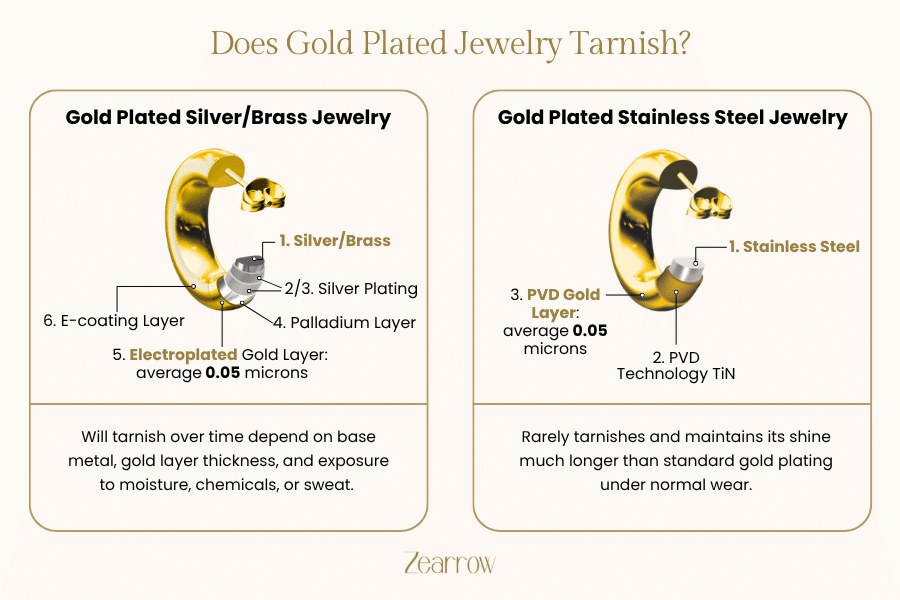
Gold plated jewelry is made by applying a thin layer of gold over a base metal, such as brass, sterling silver, or stainless steel. It offers the appearance of solid gold at a more affordable price.
In jewelry manufacturing, two common gold coating methods are:
- Electroplating, typically used on brass and sterling silver;
- Physical Vapor Deposition (PVD), commonly used on stainless steel.
Conventional gold electroplating often has a thickness of approximately 0.03–0.06 microns, although thicker coatings are available. In this article, we mainly focus on these 2 types of gold jewelry, including how and why they tarnishes and what we can do to improve its durability.
Does Gold Plated Jewelry Tarnish?
Yes, gold plated jewelry can tarnish over time, but how quickly it happens depends on the base metal, gold plating thickness, coating quality, and exposure to moisture, sweat, and chemicals.
Gold itself is highly resistant to tarnishing. However, thin or worn gold plating can allow underlying metals to react with the environment, leading to discoloration. Daily friction can also gradually wear away the gold layer, causing fading or exposing the base metal.
High-quality gold plating, sufficient coating thickness, and protective finishes such as barrier layers and e-coating can help improve tarnish resistance and long-term color retention.
1. Does Gold Plated Brass Tarnish?
Yes. In fact, gold plated brass jewelry can tarnish, particularly when the gold layer becomes thin or worn. Brass contains copper and zinc, which can react with moisture, sweat, and environmental substances, causing darkening or greenish discoloration. However, properly plated brass jewelry can maintain its appearance for a long time.
2. Does Gold Plated Sterling Silver Tarnish?
Yes, gold plated sterling silver jewelry can tarnish when the underlying silver reacts with sulfur-containing substances, particularly if the gold plating is porous or worn. However, sterling silver remains a popular base metal for premium gold plated jewelry, including gold vermeil.
3. Does Gold Plated Stainless Steel Tarnish?
Gold plated stainless steel is highly resistant to tarnishing because stainless steel, especially 316L, offers excellent corrosion resistance.
However, its gold finish can still fade or wear over time. To improve durability, manufacturers often use PVD coatings, which generally offer better wear and color retention than conventional electroplating. Still, prolonged exposure to harsh chemicals, saltwater, or abrasion can gradually damage the coating.
Some manufacturers use traditional electroplating instead of PVD on stainless steel, which may result in lower wear resistance and faster color fading, depending on the plating quality and thickness.
4. Does 14/18K Gold Plated Tarnish?
Yes, both 14K and 18K gold plated jewelry can tarnish or lose their gold finish over time.
Plating with 14K or 18K gold is thicker and more durable than standard gold plating. But still, even high-karat gold plating can wear off over time when exposed to constant friction, sweat, and harsh chemicals. You should ensure proper cleaning, storage, and careful wear if you want them to last long.
Why Does Gold Plated Jewelry Tarnish?
The main reason gold plated jewelry tarnishes or fades is that it has a relatively thin outer layer of gold. Unlike solid gold jewelry, which contains gold alloy throughout, gold plated jewelry has a base metal underneath. As the gold layer wears down, the underlying metal may become exposed and react with moisture, sweat, or chemicals, causing discoloration.
Other factors that affect the durability of gold plated jewelry include:
- Inconsistent Gold Plating Quality: Some unreliable suppliers may use extremely thin gold layers or misrepresent the gold content, resulting in jewelry that fades much faster than expected.
- Limited Manufacturing Capabilities: Some factories lack advanced multi-layer electroplating techniques or protective finishes such as e-coating, which can improve wear resistance and color retention.
For jewelry brands, choosing a reliable manufacturer with transparent plating specifications and proper quality control is essential for producing durable gold plated jewelry.
How Quickly Does Gold Plated Jewelry Tarnish?
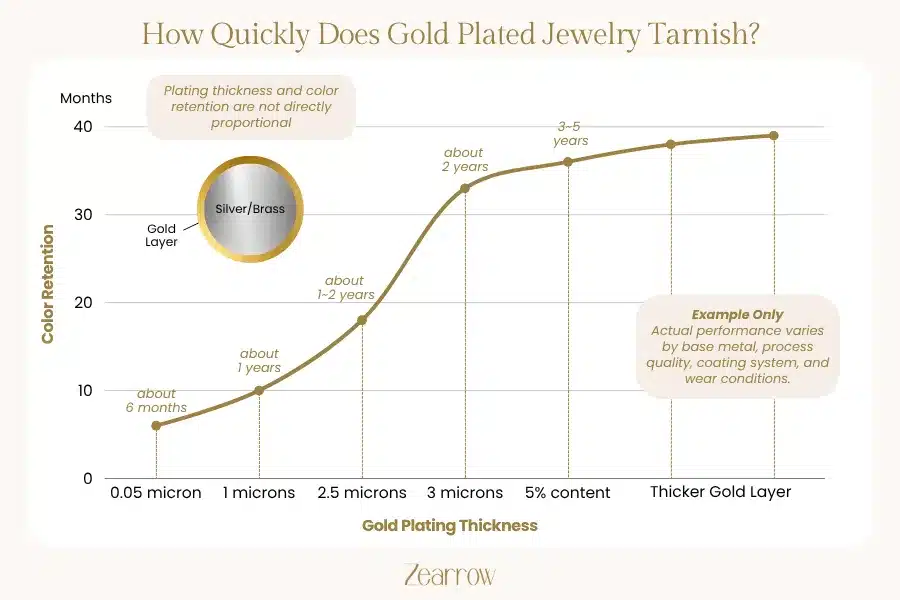
Gold plating thickness is an important factor in how long gold plated jewelry retains its color. Under otherwise identical conditions, a thicker gold layer generally provides better resistance to wear and helps maintain the jewelry’s appearance for longer.
- Standard Gold Plated Silver/Brass Jewelry: May tarnish within months if worn regularly.
- Gold Vermeil Jewelry: With a thicker plating, it can last for several months to about 2 years.
- PVD Gold Plated Jewelry: Highly durable and can maintain its shine for years.
- Gold Filled Jewelry: Can last for 3-5 years thanks to its significantly thicker gold layer.
However, plating thickness and color retention are not directly proportional. For example, a 2-micron gold layer does not necessarily last four times as long as a 0.5-micron layer. Actual durability also depends on the base metal, plating quality, protective coatings, daily wear, and exposure to chemicals.
Therefore, plating thickness alone cannot reliably predict how many months or years gold plated jewelry will retain its color.
How to Keep Gold Plated Jewelry from Tarnishing
Maintaining gold plated jewelry requires simple but consistent care.
- Keep Jewelry Dry at All Times: Remove your jewelry before showering, swimming, or exercising.
- Avoid Contact with Chemicals: Ensure it doesn’t come in contact with perfumes, lotions, and cleaning agents.
- Clean Gently and Regularly: Use a soft cloth to clean dirt and oils after you’ve removed the jewelry.
- Choose High-Quality Plating: Invest in jewelry pieces that have thicker plating or PVD coating.
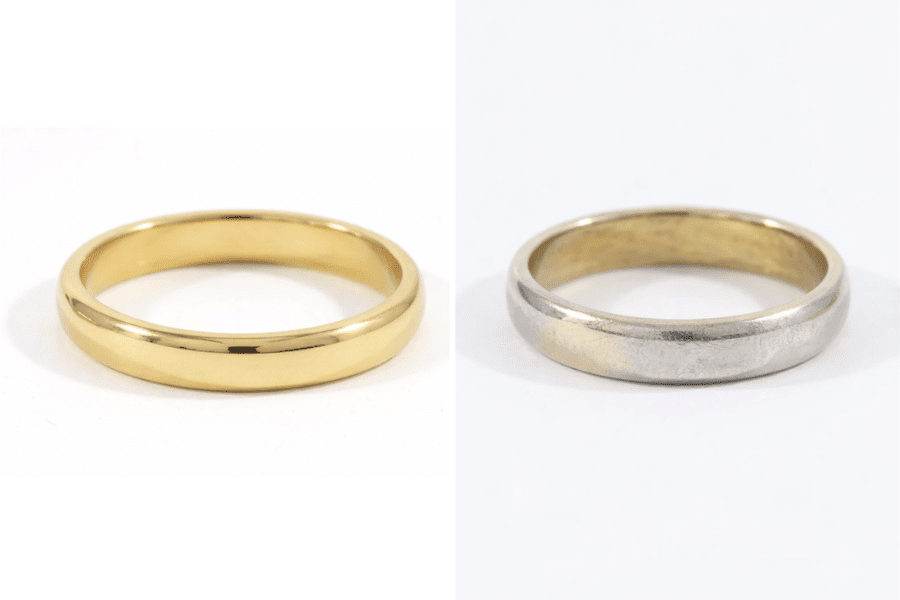
How to Remove Tarnish from Gold Plating?
If your jewelry begins to lose its shine, this gentle cleaning procedures can help restore its original appearance:
- Use Mild Soap and Lukewarm Water: Soak the jewelry briefly in mild soap and rinse carefully with lukewarm water.
- Gently Wipe with a Soft Cloth: Don’t scrub or wipe the jewelry with a hard cloth—it can wear off the gold layer.
- Avoid Harsh Chemicals or Abrasives: Strong chemicals and cleaning solutions can strip off the gold plating.
What Should Jewelry Brands Consider When Choosing Gold Plating?
For jewelry brands, choosing the right gold plating isn’t about selecting the thickest or most expensive coating. Instead, it’s about working with a reliable manufacturer to find a plating solution that balances product quality, target price, and expected durability.
Different jewelry markets require different plating specifications:
- Affordable Fashion Jewelry ($30–$60): A gold plating thickness of 0.03–0.06 microns can be a cost-effective option for fashion jewelry, particularly for occasional wear. However, brands should set realistic expectations for color retention and durability.
- Demi-Fine Jewelry ($80–$350): Gold vermeil, featuring at least 2.5 microns of gold over sterling silver, is a suitable option for brands seeking premium materials and improved wear resistance.
- Higher-Durability Collections: Gold filled jewelry, with a substantial bonded gold layer, can offer greater resistance to wear and longer-lasting color retention. It is worth considering for brands prioritizing durability, provided the product meets applicable gold-filled standards.
Ultimately, the best plating solution is one that meets your customers’ expectations without unnecessary manufacturing costs. A trustworthy jewelry manufacturer should provide transparent plating specifications, recommend suitable coating processes, and perform quality testing to ensure consistent results.
Conclusion
In summary, does gold plated jewelry tarnish? The answer is Yes, but how fast this happens depends largely on the base metal, plating quality, and maintenance.
While gold plated jewelry doesn’t offer the durable performance of solid gold, it remains an excellent choice for affordable luxury.