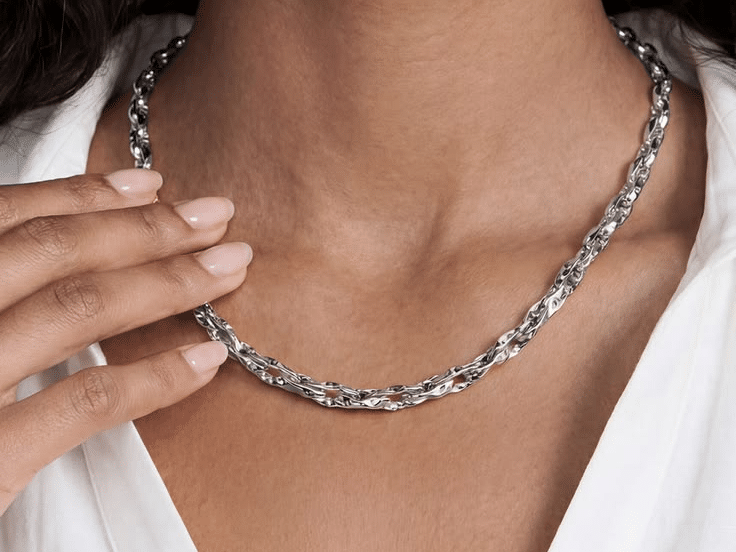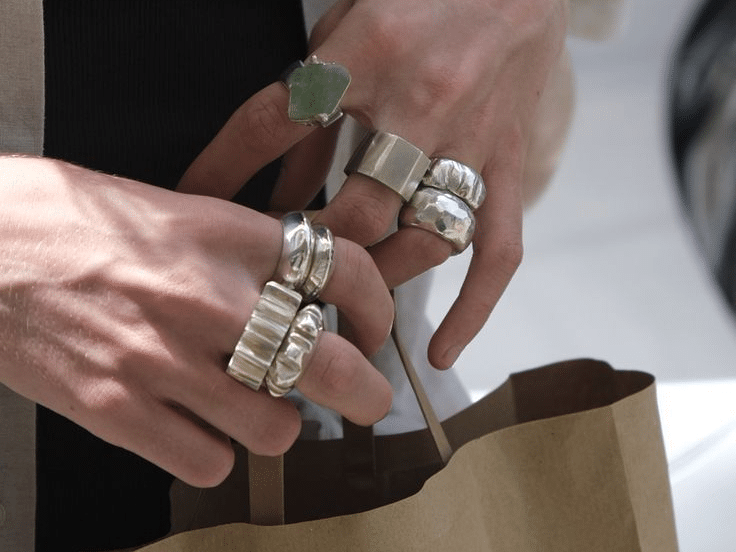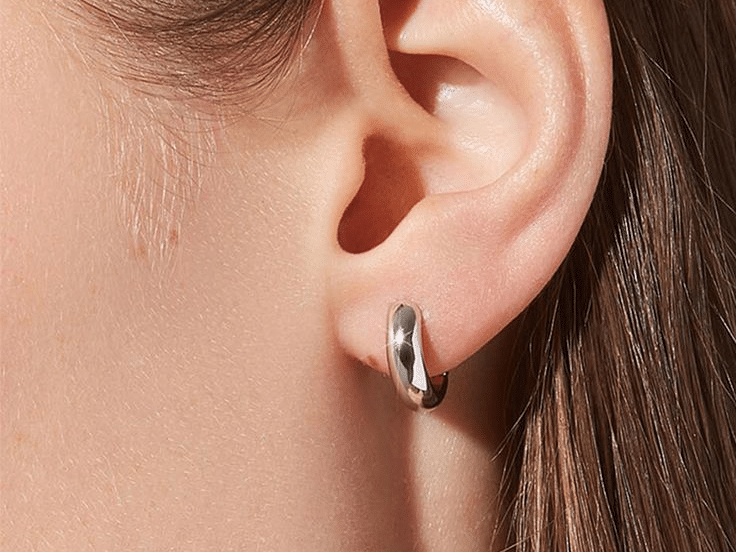
Many jewelry lovers struggle with unexplained skin reactions after wearing their favorite pieces, and a common culprit behind these allergic reactions is nickel. With sterling silver jewelry becoming increasingly popular for its beauty and durability, it’s necessary to ask: is sterling silver nickel free?
This guide explains what sterling silver is made of (whether or not it contains nickel), the benefits and risks of nickel in metal alloys, and how to tell if sterling silver jewelry is nickel-free.
What is Sterling Silver Made Of?
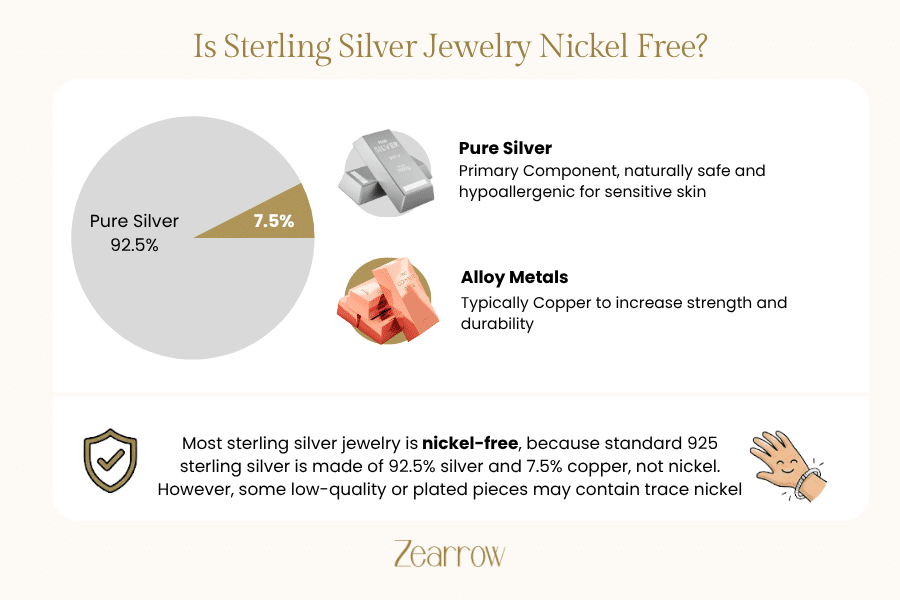
Sterling silver contains 92.5% pure silver and 7.5% other metal alloys. The most commonly used alloy is copper. This combination improves the strength and durability of the jewelry without significantly affecting its natural shine. It also makes it more suitable for everyday jewelry because pure silver alone is soft and prone to damage.
Does Sterling Silver Contain Nickel?
NO, high-quality 925 sterling silver is generally nickel-free, especially when sourced from reputable jewelry brands or certified suppliers. It instead relies primarily on copper as its alloy.
But not all metal alloys labeled “sterling silver” follow the same strict composition. Some manufacturers introduce cheaper metals like nickel into the alloy to cut costs, boost scratch resistance, or alter final finishing traits.
Is Sterling Silver Jewelry Nickel Free?
Before we proceed, it is important to understand what is nickel free jewelry. Nickel-free jewelry doesn’t always mean the piece contains zero nickel. Instead, it typically indicates that any nickel present is only in trace amounts, well below regulated safety limits for skin contact.
Now, is sterling silver jewelry nickel-free? YES. Most genuine sterling silver jewelry circulating the market are nickel-free, especially when produced in regions with strict consumer safety regulations. However, not all pieces in the market are made to the same standard. Some lower quality or mixed-metal jewelry may still contain nickel in the metal alloy or in small components like clasps, hooks, earring posts, and jump rings.
To protect your skin (especially individuals with extreme skin sensitivities), you must look for explicit hypoallergenic certifications, read laboratory batch test results, or request total material transparency directly from the supplier before completing a purchase.
Why Nickel Is Used in Some Jewelry?
Now that we know what is nickel free jewelry, we need to understand why nickel is used in some jewelry pieces. Here are the benefits and risks of having nickel in metal alloys.
Benefits of Nickel in Metal Alloys
Manufacturers often utilize nickel in fashion jewelry alloys due to its exceptional industrial advantages. It significantly boosts the hardness and structural durability of softer metals, preventing scratches and warping over time. Additionally, nickel provides excellent corrosion resistance and an appealing, high-shine silver finish.
These properties, combined with its incredibly low cost, make it a highly efficient option for producing affordable, long-lasting accessories, despite its well-documented allergic risks.
Risks of Nickel for Sensitive Skin
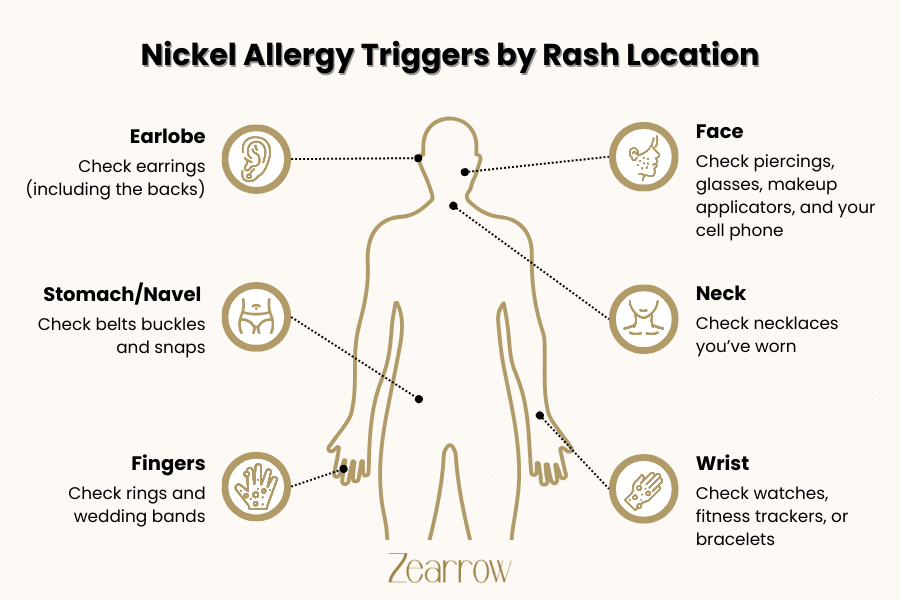
Nickel is the major cause of allergic contact dermatitis worldwide, both among men and women. When sensitive skins encounter the metal for extended periods, their immune system often reacts with itching, redness, swelling, and painful rashes. In severe cases, dry patches or fluid-filled blisters can form.
Since these uncomfortable symptoms can develop at any age and worsen with repeated contact, it is essential that allergy prone consumers only select verified nickel-free jewelry.
Can You Be Allergic to Silver?
True silver allergies are very uncommon because pure silver is generally considered hypoallergenic. In most cases, when people experience localized dermatological reactions, the underlying cause is almost always an additive metal within the alloy blend, maybe nickel or copper. Factors like sweat, moisture, friction, and prolonged skin contact accelerates the leaching of these metals from the jewelry onto your skin where they cause irritations.
Is Sterling Silver Hypoallergenic?
With pure silver being hypoallergenic, it’s fair to ask, is sterling silver hypoallergenic too?
YES, high-quality, nickel-free sterling silver is one of the most common hypoallergenic materials used in making jewelry. Its 92.5% pure silver core is naturally stable and chemically inert, making it non-irritating to the human skin. The standard 7.5% copper alloy used to strengthen the metal also doesn’t trigger allergic reactions, ensuring the entire material composition remains safe for sensitive skins.
However, reactions can still occur if the alloy contains nickel or if the jewelry is poorly finished.
Does 925 Sterling Silver Tarnish?
Another question people often ask is: does 925 sterling silver tarnish?
YES, 925 sterling silver jewelry naturally tarnishes over time due to its metallic composition. While the pure silver content inherently resists corrosion, the remaining copper alloy actively reacts when exposed to air, moisture, and sulfur compounds in the air. This chemical reaction gradually creates a dark layer on the surface, though proper maintenance can slow down the process.
Does Sterling Silver Turn Green?
Since it tarnishes over time, you might worry, does sterling silver turn green too? Afterall, discoloration is as a result of tarnish.
Well, sterling silver itself doesn’t usually turn green, but it can sometimes cause green discoloration on the skin. This happens when the copper reacts with sweat, moisture, lotion, body oils, or harsh chemicals. The chemical process generates green copper salts on the jewelry surface that can temporarily transfer onto your skin. However, it is harmless and more common in humid conditions or with people that have very acidic skins.
How to Tell Sterling Silver Jewelry is Nickel-Free?
To avoid buying or wearing sterling silver jewelry that contains nickel, do these.
- Check Hallmarks and Stamps
Look closely for official engravings like “925”, “Ster”, or “Sterling” on the item’s surface, as these stamps guarantee 92.5% silver content. Also search for explicit “Nickel-Free” or “Hypoallergenic” markings, to be very sure. Genuine hallmark stamps indicate high-quality production standards.
- Ask for Material Certifications
Request for a formal certificate of compliance or a detailed laboratory materials report directly from the manufacturer to be sure nickel wasn’t introduced during production. A reputable custom jewelry manufacturer maintains total supply chain transparency and will readily provide document proof confirming that her metals meet strict safety regulations.
- Use Nickel Testing Kits
Purchase an affordable chemical testing kit containing dimethylglyoxime to verify your jewelry at home. Apply a few drops of the solution onto a cotton swab and rub the metal surface firmly. If the swab turns pink, nickel is present, and that’s a warning that you should avoid wearing that piece.
Conclusion
In summary, is sterling silver nickel free? YES. Standard 925 sterling silver is usually made with copper, not nickel, and is generally safe for sensitive skins. However, some lower-quality sterling silver jewelry may contain nickel. So, to avoid allergic reactions, make sure you check for 925 hallmarks, buy from trusted brands, and confirm the metal content when possible.